Even in the most competitive luxury battlefield, unexpected dark horses can emerge.

According to the latest annual report from second-hand luxury platform Rebag, Hermès, The Row, and Miu Miu are this year’s top brands in the secondary market in terms of resale value, drawing wide attention from the industry.
Rebag tracks brand performance and resale value across global secondary markets every year, analyzing millions of cross-region transactions.
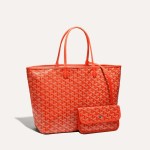
Last year, Goyard shocked the market by surpassing Hermès with a 104% resale rate. This year, Hermès reclaimed the top spot with an average resale value of 138%, up 38% from 2024. Eight Hermès bags have resale prices above their original retail, with the Mini Kelly II reaching 282% of its original price, the Sellier Birkin 183%, and the Constance 137%. Over the past decade, Birkin bags have appreciated 92% on the resale market, far exceeding the cumulative 43% increase of Hermès retail prices.
While Hermès continues to dominate as the “handbag king,” a surprising entrant is The Row, which for the first time enters the unicorn category. Its handbags retain up to 97% of retail value on the secondary market, outperforming Chanel (92%) and Louis Vuitton (88%).
Rebag notes that consumer preferences are shifting toward minimalistic and high-quality products, coexisting with the traditional logo-centric aesthetic. This signals a maturing market where craftsmanship and versatility can compete with established luxury brands.
Miu Miu also recorded its best performance yet, with an average resale value of 104%, driven by its strong creative direction and accessory strategy.
With growing nostalgia in consumer markets, searches for Louis Vuitton’s collaboration with Takashi Murakami from twenty years ago surged sixfold, with some resale prices exceeding 130% of original retail. Millennial nostalgia is also reflected in renewed interest in the Balenciaga Le City Bag (+986% search growth), Celine Phantom smiley bag, and Chloé Paddington bags.
Macro trends also enhance the investment appeal of high-end jewelry. Van Cleef & Arpels leads with a 112% resale value, with its Sweet Alhambra pendants reaching 128% and butterfly bracelets 123%. Cartier’s Love and Trinity lines remain stable, giving the brand an overall resale rate of 87%.
Across the multi-category luxury market, mainstream brands dominate the secondary market—The Row is the only exception.
Last year, Goyard broke Hermès’ four-year streak at the top, ranking second in resale value for 2023, becoming a rising competitor to watch. Despite Goyard’s strong performance, the brand was founded in 1853 and has a history comparable to Louis Vuitton.
The Row’s appearance on the secondary market resale leaderboard is significant—it may be the first instance where a younger brand cracks open the highly competitive luxury handbag market. Founded in 2006, The Row started as a high-fashion label and later expanded into handbags, taking less than 19 years to enter the luxury handbag pyramid.

Similarly, Miu Miu is a relatively young luxury brand, founded in 1994, now 31 years old, benefiting from its parent company, Prada, with a century-long history.
While handbag trends may change, resale value often reflects long-term brand influence—a true test of brand strength. Many historic mid-tier brands with popular bags, such as Gucci and YSL, underperform in resale value.
Handbags are the cash cows of luxury brands and the core of brands like Louis Vuitton and Hermès. Established players defend this segment fiercely.
The Row’s breakthrough in the luxury handbag market is driven by the Margaux bag, hailed as the “next Birkin.”
Launched in 2018, the Margaux bag’s logo-free, minimalistic design went against the prevailing trends. At the time, Gucci’s Alessandro Michele dominated with maximalist designs, Dior revived the Saddle Bag, and popular handbags like Gucci Dionysus, Chloé Drew, and Loewe Gate were not known for capacity. Dior’s large Book Tote also launched in Spring/Summer 2018, but its ornate design was in stark contrast to the practical Margaux.
From a design perspective, the Margaux solves practical issues of larger bags. It offers generous capacity using leather rather than woven fabrics, feels lighter than expected, and its handle length and bag flexibility suit everyday use, increasing potential wear frequency.
The Margaux’s design shares conceptual similarities with Hermès’ less common models like Bolide, Garden Party, and Plume but achieves clear differentiation, appearing lighter and more modern, capturing a loyal, trend-defying customer base.
Priced at €6,300, the Margaux exceeds the mid-range for most luxury bags and Hermès entry-level options like Picotin, aligning The Row with top-tier luxury brands. Its material and craftsmanship are top-level, breaking the tradition that young fashion labels only sell accessible luxury handbags.
This strategy aligns with The Row’s fashion line, with clothing prices comparable to Hermès, including Italian-made cashmere coats ranging from $3000-$15000
By selling more minimalistic designs at higher prices than traditional luxury brands, The Row presents a quietly bold attitude, recognized and embraced by wealthy, loyal customers. This is the essence of The Row’s appeal—it reinforces brand positioning across fashion, handbags, and homeware, with handbags carrying intrinsic high value.
The common misconception is that introducing a handbag elevates a brand’s positioning. A poor example is Alo Yoga’s $20,000 bag, which clashes with its mid-to-high-end activewear identity.
The Row’s handbag success is often simplified as a single hit product, but the reality is a precise, patient, and strategically aligned brand approach. Launched in 2018, the Margaux only hit Lyst’s popular items list in 2023, coinciding with the market shift from maximalism to minimalism. Five years of refinement positioned the bag perfectly for the luxury market’s slower-paced competition.
In the past five years, mainstream brands have entered a vicious cycle of design homogenization, chasing trending handbag styles, making it harder for any single brand to dominate. Creative directors now operate on 3–5 year cycles, pressured to produce economically successful designs quickly, leaving few brands, like Loewe, investing in structural innovation.
Fewer brands deeply align handbags with fashion lines and core brand values, making enduring classics rarer. Even Chanel, historically successful with handbags, dilutes classic appeal by launching new bags every 2–3 years. Gabrielle and 19 bags now have historically low resale rates, as new launches cannibalize classic sales without creating the next icon.
Even Hermès is not immune—last year Goyard’s temporary lead was a warning. Hermès is increasingly drawn into competitive waves; the new Faubourg Express is compared to Miu Miu, suggesting even Hermès follows trends outside Birkin and Kelly. Some consumers now question if Constance belongs in the Hermès “iron triangle,” and newer, less popular models struggle to win favor.
In other words, Hermès has not fully decoded the luxury handbag formula—The Row has cracked it, identifying and engaging a selective, loyal clientele, delivering craftsmanship, durability, and timeless design.
Additionally, The Row’s anti-social-media strategy contrasts with mainstream brands’ decade-long social media engagement, creating scarcity and mystique reminiscent of early luxury brands.
Platforms like social media and resale marketplaces are reducing historical advantages, placing heritage brands and younger labels on equal footing as investment assets.
Rebag notes that with continued price hikes, consumers increasingly view the secondary market as a strategic way to acquire luxury goods without compromising quality. Luxury resale has shifted from scarcity-driven demand to proactive investment, with brands actively managing production to preserve long-term value.
Consumers now treat luxury items as investments. This trend, once dominated by Hermès, is extending to other brands emphasizing craftsmanship, scarcity, and strict distribution systems.
Time is no longer a luxury moat—preserving value requires brands to continuously demonstrate why they are worth choosing, every single moment.